Keeper Crew · 10 min read
Keeper Crew Notes: August 2026
Hey Keeper Crew!
Welcome to another edition of the NTNWH monthly email blog.
Whether you have been following along for years or are new to the crew, thank you for being a part of growing this community and supporting wildlife lovers, conservation supporters and curious minds.
Fun facts!
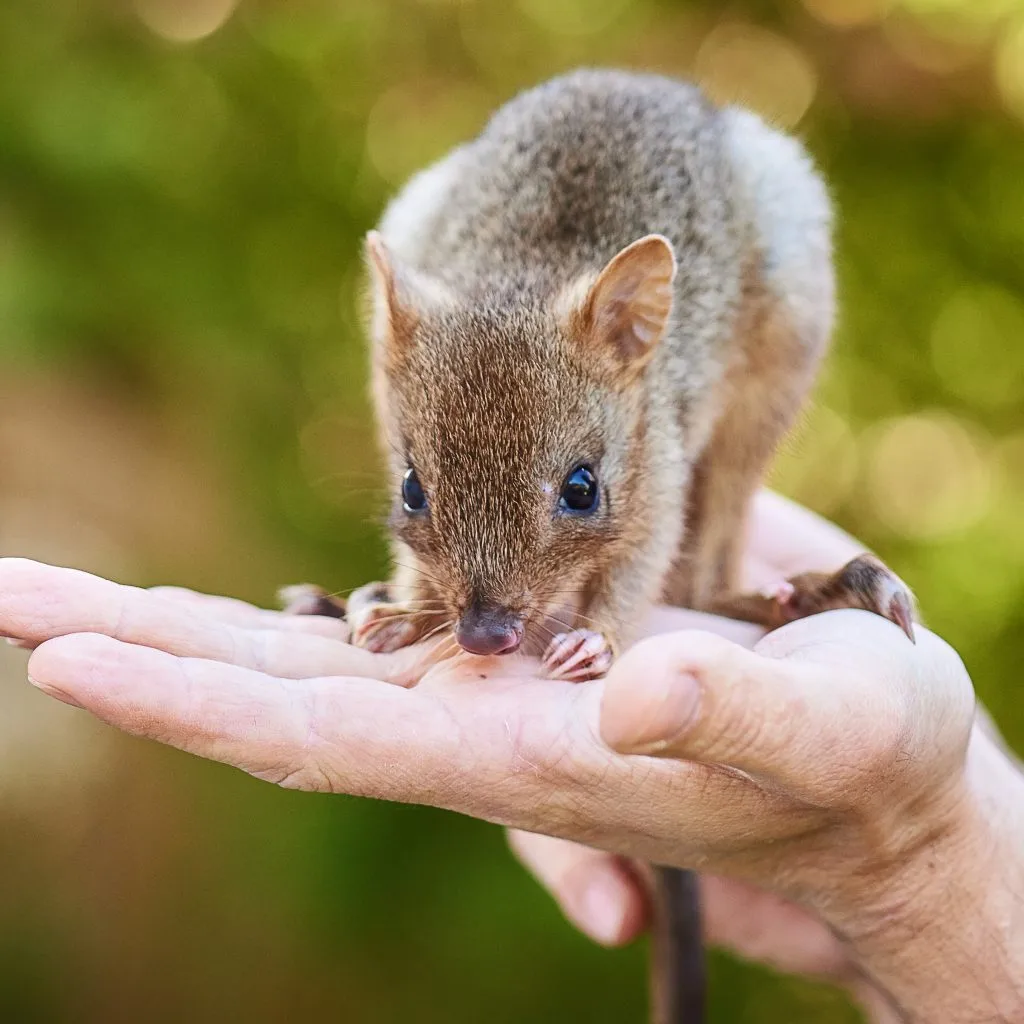
Brush-Tailed Bettongs
Did you know that Brush-Tailed Bettongs, are what we call “environmental engineers” or “ecosystem gardeners”. We call them that because they dig up fungus, enriching the soil, reducing bushfire risk by burying leaf litter and spreading fungus spores, allowing them to aid trees in communicating and helping each other distribute resources and messages via an electrophysiological system. They also deliberately plant seeds, allowing them to come back to them for food, but this also allows sand dunes to not shift due to the roots of the planted saplings. In a single year, they can dig up over 2-6 tons of soil, that is 2,000-6,000kg of soil! That is up to 4,000 times their body weight and near the weight of a commercial truck or a fully loaded school bus.
Sadly, Bettongs are now functionally extinct due to urbanization and invasive species like feral cats hunting them to the brink of extinction causing them to now be rarer than giant pandas, with only roughly 1,800 of them in the wild compared to the original estimated over 10,000,000 in 1788 when European settlement first occurred. This is unfortunately a massive issue in Australia causing us to have the largest extinction rate on earth which is mainly because of cats as they kill over 2 billion native animals per year. To put that into perspective - if it was humans that cats were killing instead of our native wildlife, the entire human race would be extinct in 4 years,159 days, 17 hours and 22 minutes (taking into account the average amount of humans born per year and leap years). Now imagine how devastating that is to our native and endemic wildlife after it happening for roughly 138 years now.
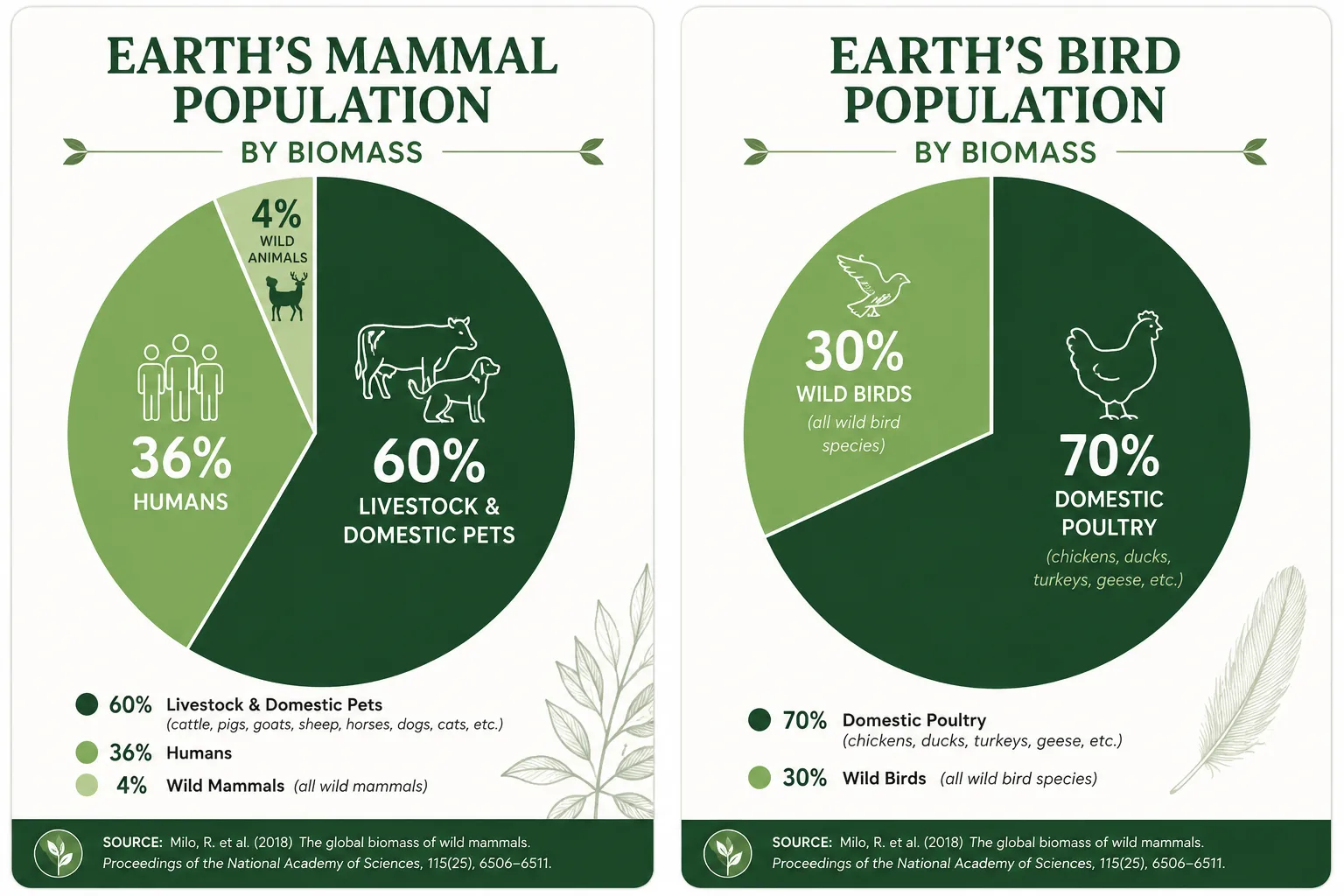
This is part of the reason why 95%-96% of mammals on earth are humans or our captive animals.
But there are some simple things you can do to help save these animals! The easiest thing to do is follow your local cat curfew laws and, even better, keep your cat in an outdoor run or inside your house at all times. You can also follow channels like myself that fund wildlife conservation projects and pioneer education, research and development projects. Every time you like, share, comment or save, you help spread our message and fund wildlife conservation projects. It costs you nothing and takes almost no time, but it makes a world of a difference for the animals hanging on to exist! As well as of course buying tickets to zoos or buying merch and books form creators like us! This way you get something from your contribution and so do our amazing native species! You have no idea how much these small actions can do for these vital little lives!
Tawny Frogmouth
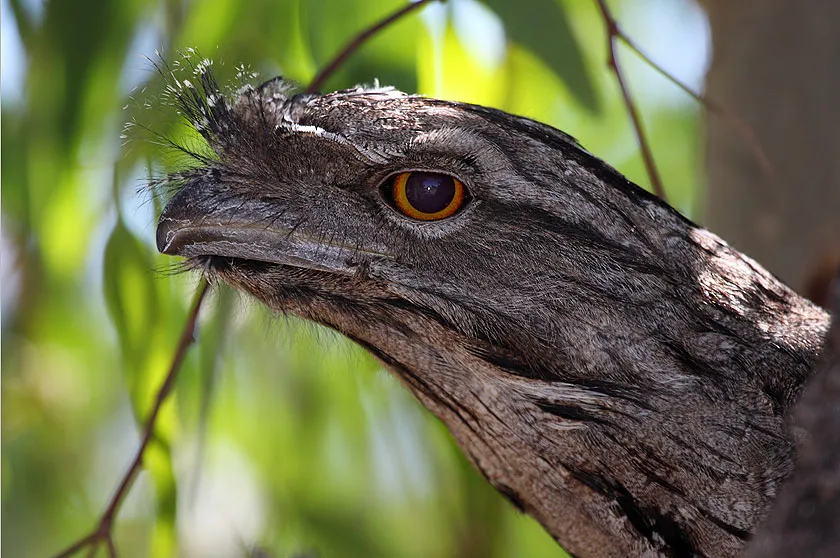
Did you know the Tawny Frogmouth is not an owl! Yep that’s right! While they possess the ability of silent flight and a neck that can rotate by 270 degrees, they are actually more closely related to Night Jars than owls. Due to their wide and blunt beak many people in early settlement called them “goat suckers”. This was based on an ancient myth that the birds flew into the fields at night to suck milk from goats, when in reality, the birds where just swooping down to catch the flies hanging around livestock! But they don’t always have to hunt like this. They found a much lazier and better way to get food! Tawny Frogmouths have a beautiful bright yellow mouth that they open wide at night and use it to reflect the moon’s light from their mouth. This creates a bright glow in their mouth that entices insects into their mouth before they then snap their mouth shut and swallow their prey! We zookeepers call this Tawny Eats (like Uber Eats) because all they have to do is sit there with their mouth open and wait for the food to come straight to them! How neat is that?!
Channel Updates
Baby Dunnarts!
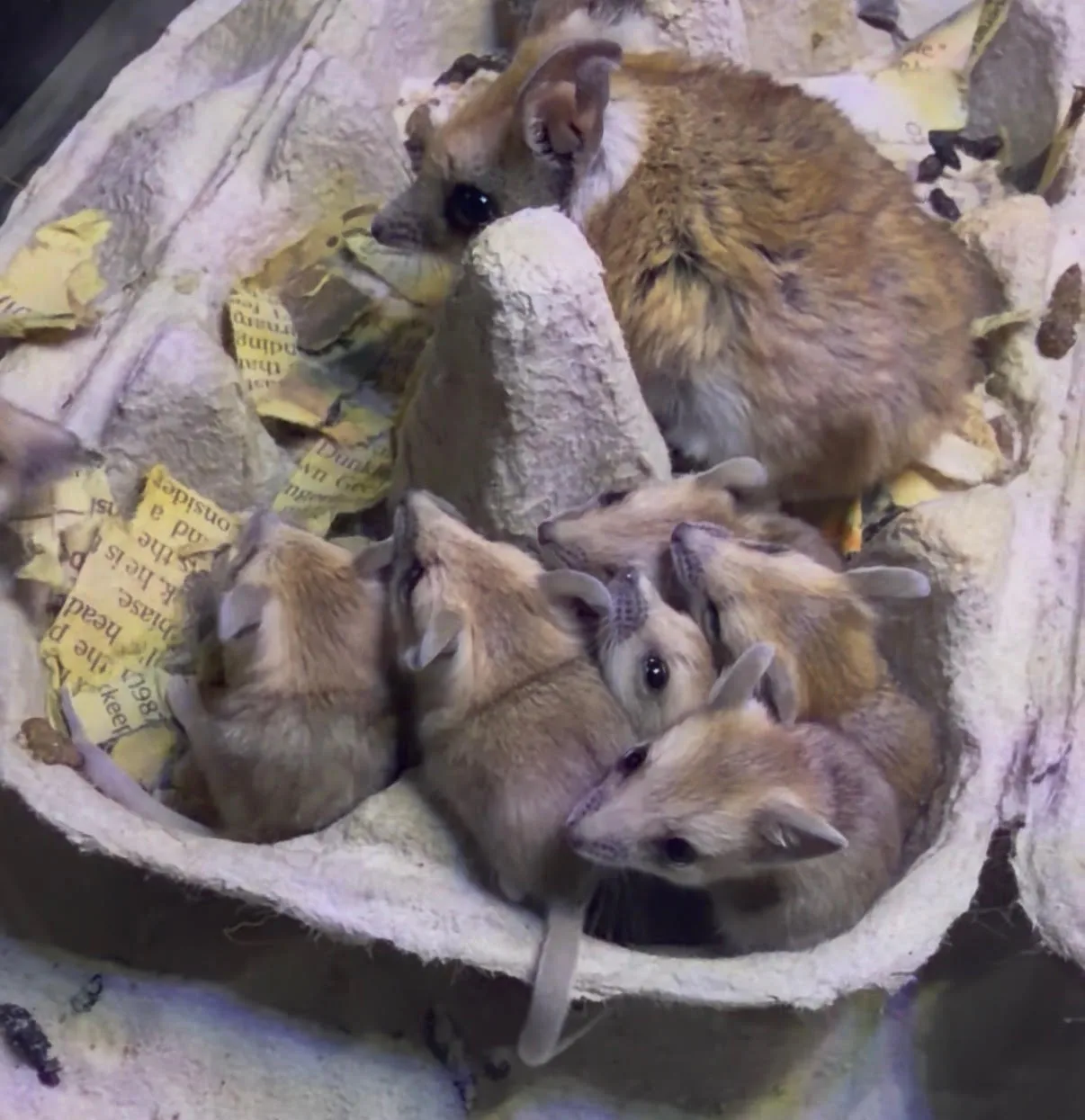
I am so excited to be able to announce that we have successfully bred Fat Tailed Dunnarts! We have six adorable little babies that are now weaning off of mum’s milk! How exciting is that?! I feel incredibly lucky and honoured to have been able to keep these remarkable little marsupials let alone being able to breed them! The reason this is so special is because these are a rare species in the hobby and are the closest living relative to the Tasmanian Tiger (thylacine) and are a vicious, yet adorable, carnivorous marsupial with a rear-facing semi-pouch which is endemic to Australia and the key in completing the thylacine’s genome sequence to bring the Tasmanian Tiger back from extinction!
Mertens Water Monitor breeding pair!
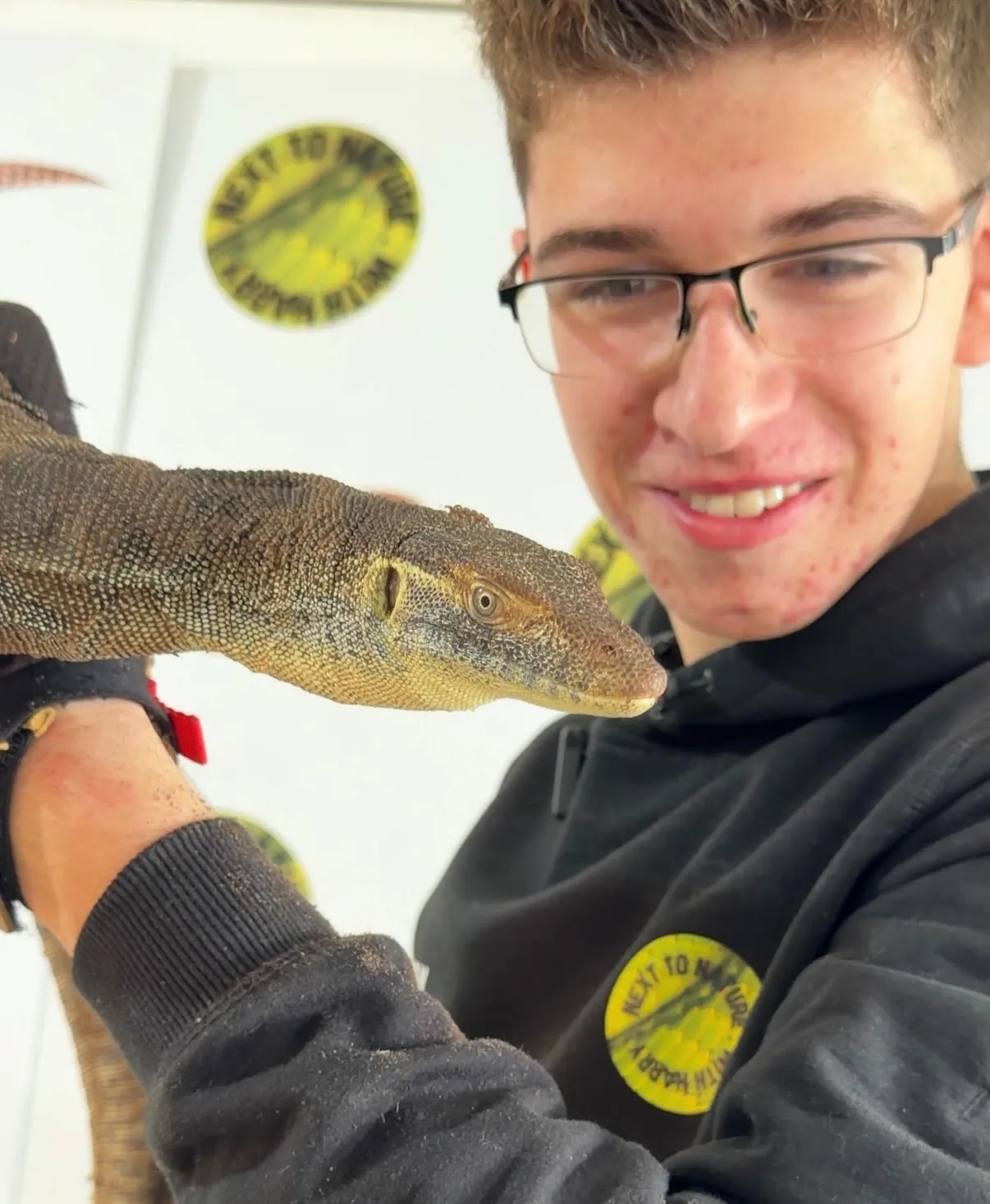
I am also very excited to announce that we have a new breeding pair of Mertens Water Monitors to welcome to the family. These beautiful animals were kindly donated to us as their previous keeper could not give them the time she felt they deserved (which I respected very much as it shows that she truly cared for these animals). I hope to be able to breed these stunning lizards in the near future so stay tuned for that. We will also be building them a MASSIVE paludarium once we relocate! Mertens Water Monitors are a larger specie of Australian monitor that is semi-aquatic. They reach an average length of 3ft-4ft and live in the Northern Territory near rivers, lakes, springs and other water bodies. They are highly agile and have a powerful laterally compressed tail to use like a paddle, propelling them through the water with good speed. They also have a nictitating membrane that they can slide over their eye just like crocodiles - kind of like goggles - which lets them see underwater comfortably.
While this is all I can fit in this month’s blog, there is lots of very exciting things going on in the background that you would never guess and I can’t wait to show you, so stick along for the ride!
Conservation Wins!
It’s so easy to see all of the negative news in the world but I am dedicated to sharing more positive and uplifting news, so let’s get into it!
- A REWILDING SUCCESS STORY
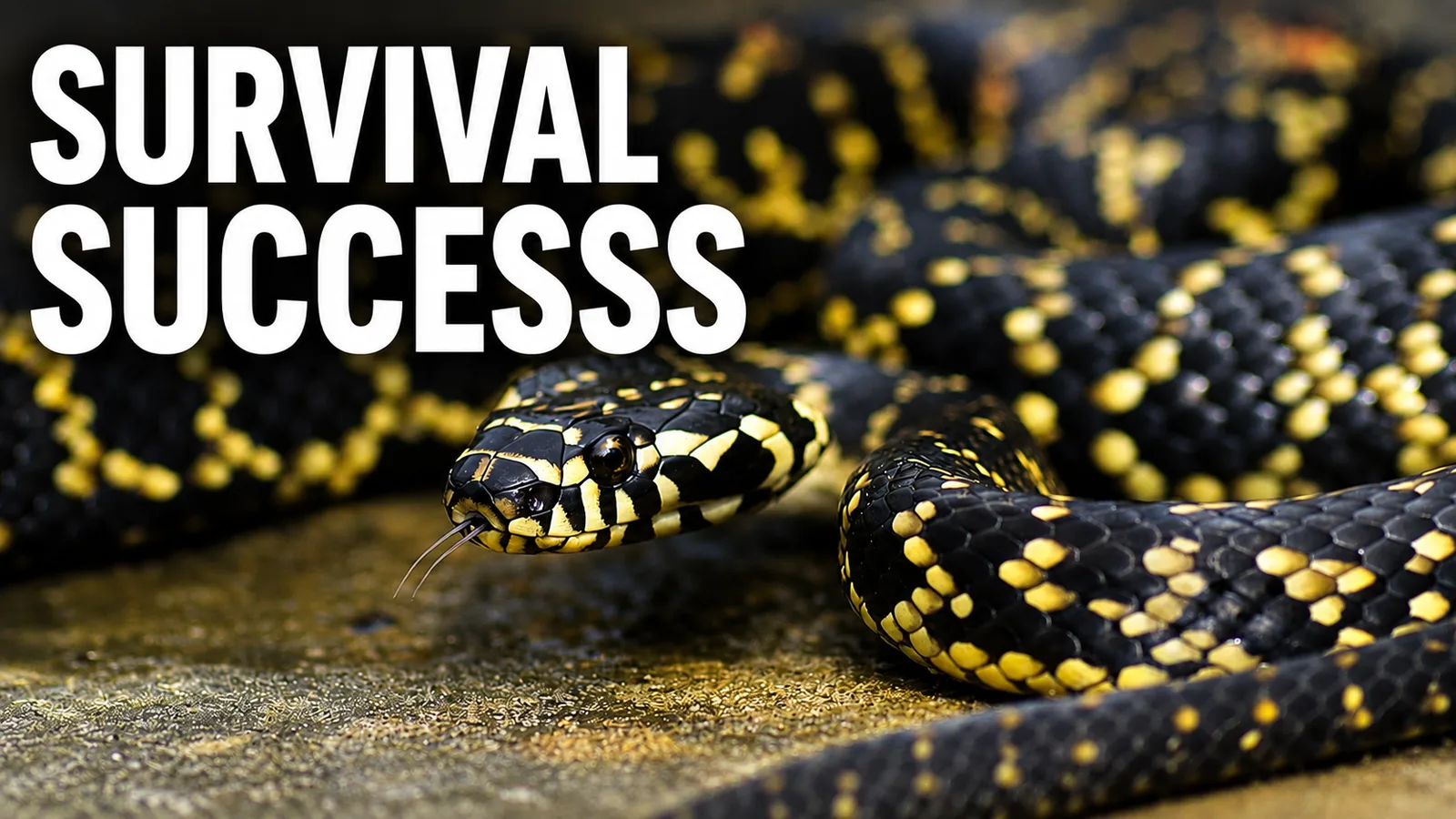
Recently, Aussie Ark, the sister company to the Australian Reptile Park, being a wildlife research, breeding and re-wilding facility, have achieved the epic feat of re-wilding the first ever Broad Headed Snakes into the wild! This is a big deal because Broad Headed Snakes are a beautiful species of venomous snake that are endemic to Australia. They are 3-4ft long snakes with a black base and stunning gold specks all over their body. They have a neurotoxic and hemotoxic venom that can be potentially harmful to humans, although if you treat the bite with proper first aid and get prompt medical attention, the likelihood of you dying is low as snakes only kill 1-2 people per year but bite thousands each year! The lifesaving antivenom that you need is actually solely produced by Aussie Ark’s sister company, The Australian Reptile Park. These snakes are also highly arboreal and spend most of their time in trees or on rock faces, destroying the myth that venomous snakes can’t climb. Even tiger snakes can. I’ve seen it!
- CARBON CAPTURING FUNGI
Scientists have successfully scaled up a pilot project using specific underground fungal networks (mycorrhizal fungi) to actively pull carbon dioxide from the air and safely trap it in the soil. The farmers using it are reporting better crop health and less need for chemical fertilizers which is great news for the economy and environment as it allows us to practice more natural agricultural methods. This means we can use less chemicals and purify our air all at the same time, how great is that?!!
- A MASSIVE CONSERVATION WIN!
A huge new marine reserve the size of France has been created. It is located near the Austral and Marquesas Islands and it bans industrial fishing, trawling and mining across the entire 200,000 square miles (roughly 518,000 square km) of highly biodiverse vital underwater habitats. This is great because it saves and unbelievable amount of lives and protects an environment we still have so much to learn from!
- THE GREAT MANGROVE TURNAROUND
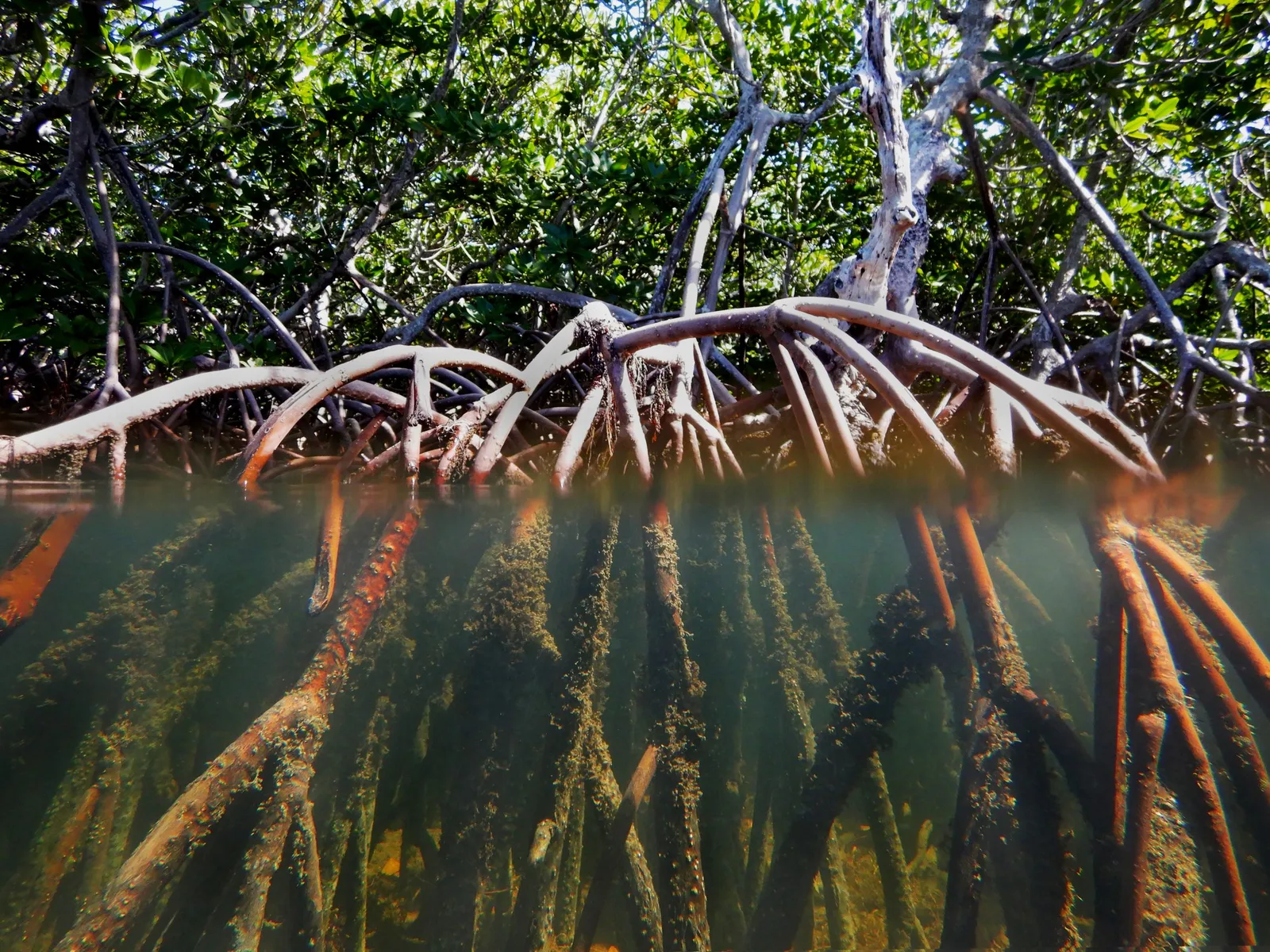
A major global study recently published revealed that mangrove forest gains are finally outpacing losses globally after decades of decline. This is terrific news because mangroves hold large amounts of carbon, provide habitats for wildlife both that is aquatic and land dwelling, they also protect coastlines and hold together river banks keeping the earth from suffering from major ecological shifts. This study also shows that there is another flora species that is adapting to a damaged environment and building a climate resistance.
- DAM REMOVALS
There are a record amount of obsolete dams being deconstructed all throughout Europe, this allows native fish populations to migrate freely for the first time in over a century, allowing fish populations to mend themselves and for scientists to study these fish and other aquatic wildlife better! With the deconstruction of these dams, they also allow water to flow freely how it is meant to, therefore restoring wetlands around the country! Wetlands that are essential for environments all over the world. (I spoke about wetland importance recently on Jo Mack’s podcast under the heat lamp https://open.spotify.com/episode/3xj6Vz6XAD145k9abKSiwe )
SCIENCE AND CONSERVATION FRONTIERS
AN ARIFICIAL EGG
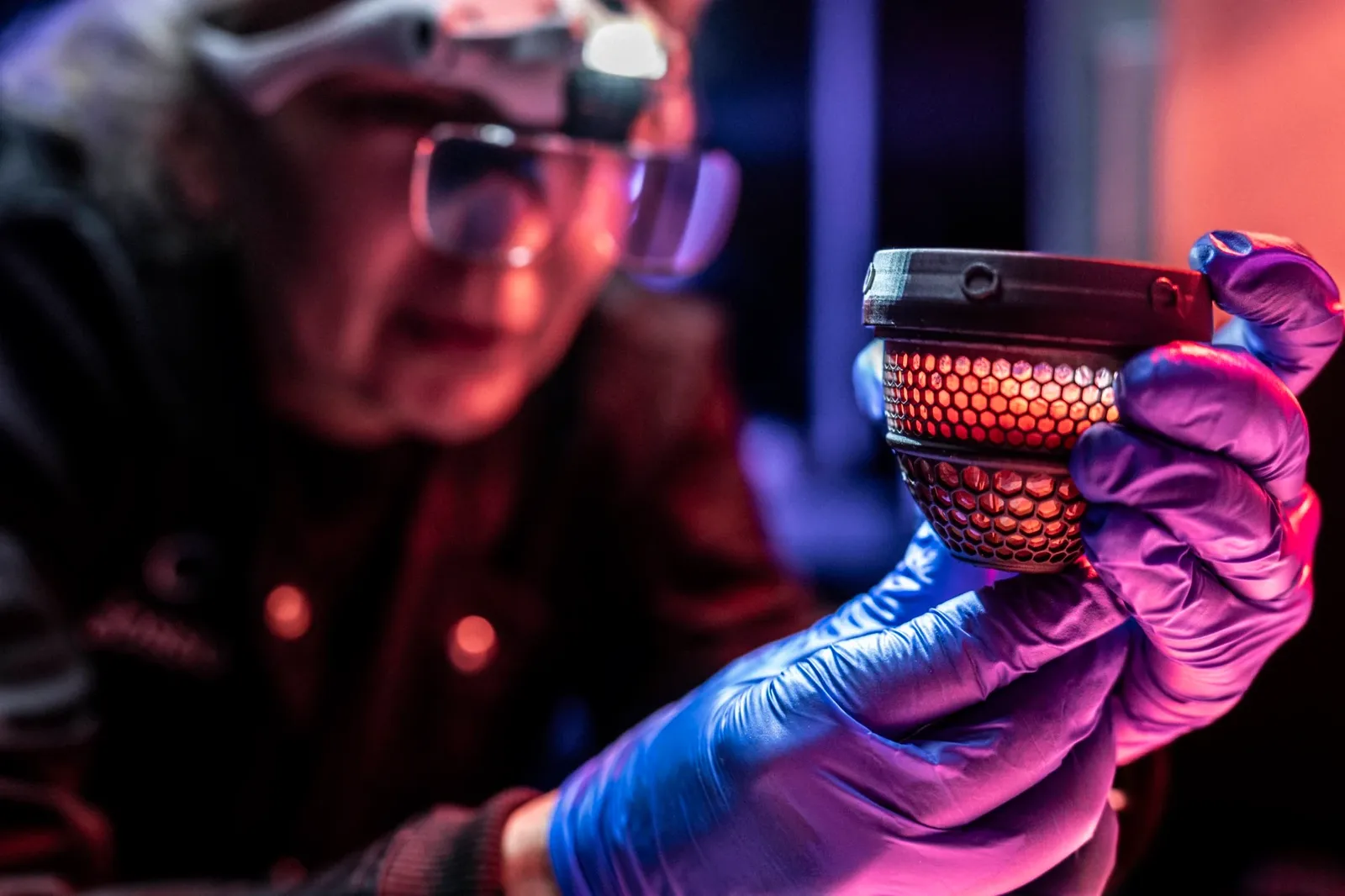
Scientists at Colossal Bioscience have developed a 3D printed artificial eggshell with a special silicone inner membrane that has now successfully hatched 26 chickens! This artificial egg has the vital functions of a real egg and allows oxygen to enter the egg, carbon dioxide to exit the egg, maintains moisture levels, protects the developing embryo and lets researchers observe development in real time! Now why is this such a big deal? Well this is a great new tool in the conservation sector. It allows us to mass produce endangered species via artificial reproductive methods. We can also use these artificial eggs to save embryos from damaged eggs! That is pretty awesome if you ask me, but of course, we are a reptile originated channel, so let me know if you want to see this applied for reptiles. Imagine if you could see a lace monitor or a olive python developing in the egg!!
What’s coming next…
I’m so excited to announce that we are working on getting our next major facility locked in and set up! At the moment we are in a small holding facility waiting for the bigger “shed” facility to get built before we move to our next facility the zoo! So if you were able to follow that then *good on you *(haha). Whilst we are in a very confusing, transitional phase, we are doing some very exciting things in the background!
One of those amazing things my new children’s book that I wrote, which is being published this year! The book (Damira: Protector of the Rainforest) focuses on crocodile conservation and safety and has plenty of interactive activities! Crocodiles are one of my favorite animals and I feel very privileged to be able to write about them. The purpose of this book is to educate people - especially kids - on crocodiles and give them a deeper understanding and appreciation for one of our most magnificent native animals. Another goal of the book is to create more junior wildlife warriors and to inspire the next generation of conservationists, wildlife rescuers and biologists! And of course, expect to see more of them as I’ve written an entire series!
We are also creating a Next To Nature With Harry podcast discussing all things wildlife, keeping, science, conservation and a little bit of motivation too! We already have some incredible special guests ready to record so make sure to keep your eyes peeled for that because if you’re a life long learner, wildlife enthusiast or simply a curious mind, this podcast is for you!
We are getting unbelievably close to reaching our goal and becoming a zoo, so stay tuned and show some love on our socials. (Links below)
OH YEAH! I also forgot to mention to you that I will be achieving a major physical feat here in Australia to massively support wildlife this Summer. I’m only teasing it lightly but don’t worry you’ll won’t miss it!
- Tiktok
- Youtube
- Instagram (Keeper Crew)
- Next to Nature with Harry Podcast: coming soon
This issue first went out to the Keeper Crew by email. Read the original newsletter or join the Keeper Crew to get the next one.